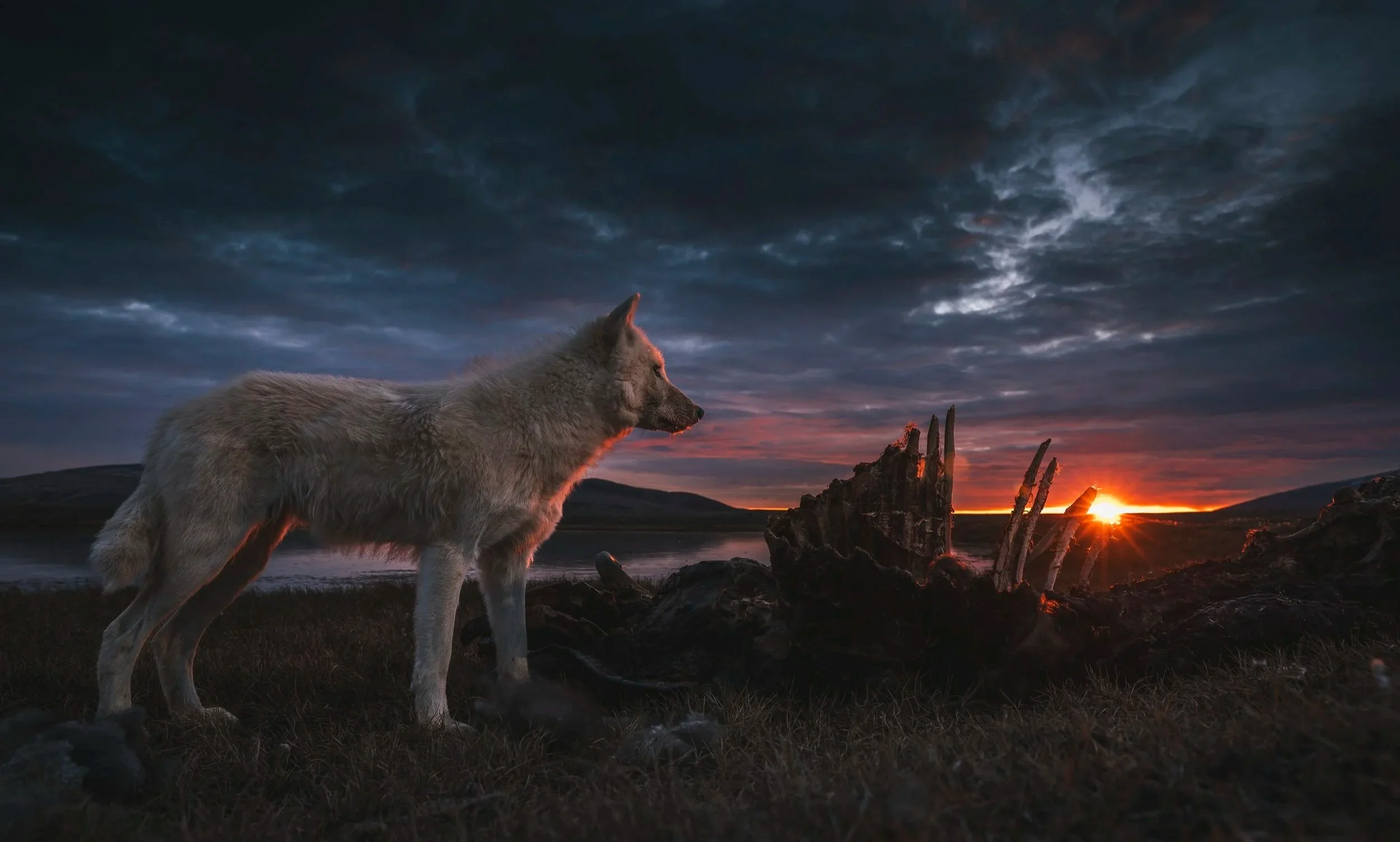
Wolves and the Wild
The recovery of wolves across the United States has been one of the defining threads of my professional life, though my relationship with wolves began in childhood.
My earliest understanding of wolves was shaped by encounters with the wolf as a living, breathing animal, as well as exposure to the 'big bad wolf' of folklore. A blood-thirsty wolf appeared in the very first dream I can remember having in life around the age of five and sparked a deeply rooted fear of wolves throughout my childhood.
As I grew older, fear gave way to fascination, and fascination gradually deepened into understanding. I came to realize that wolves have lived in grave fear of humans throughout most of recent history, but we were friends and allies for long before that. In the United States, wolves were cruelly and systematically wiped off the map until the Yellowstone restoration effort of 1995 shifted the story in a new direction—from destruction to repair at a landscape level.
Ultimately, the return of wolves to the places where they belong invites a deeper reckoning with the wild. In an increasingly domesticated, human-dominated world, their presence asks us to consider whether we can transcend polarizing human-centric conflicts and learn to sustain life beyond our most immediate horizon.